
Dog Car Safety Products: Harnesses, Carriers and Barriers
A comprehensive guide to dog car safety. Learn about crash-tested travel harnesses, vehicle carriers, cargo barriers, and critical veterinary safety rules for road trips.

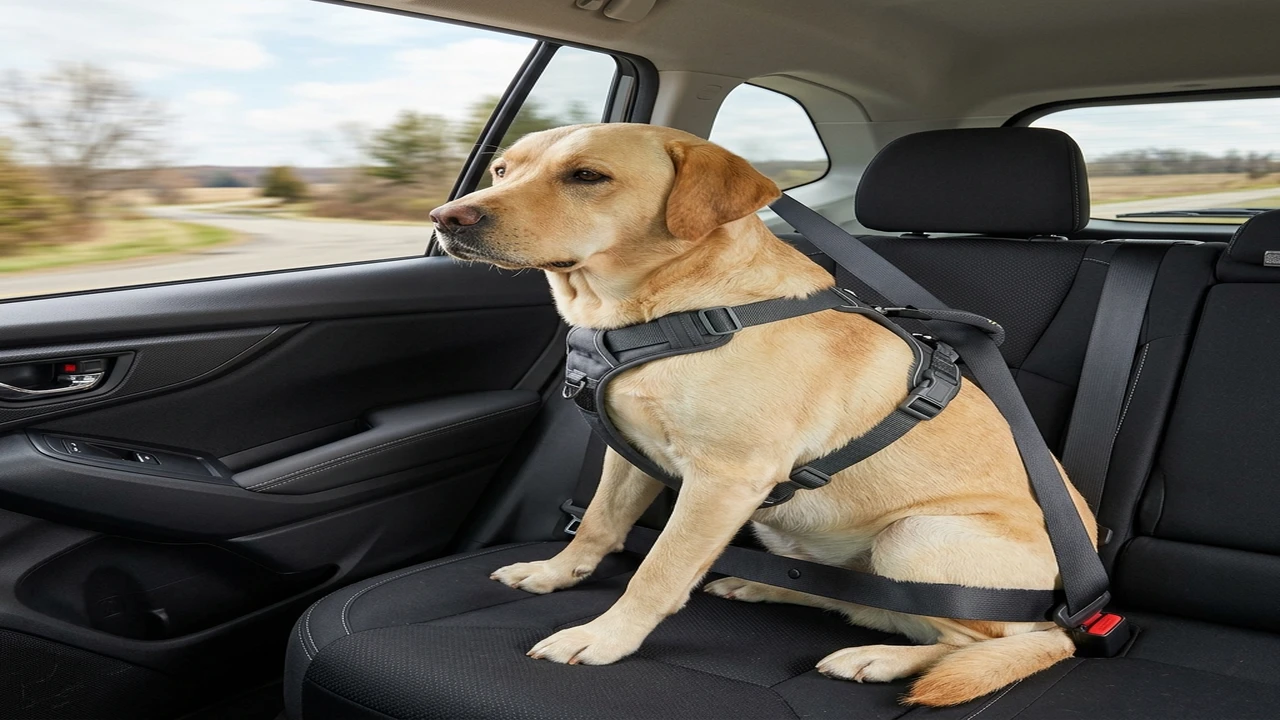
Dog Car Safety Products: Harnesses, Carriers and Barriers
For many dogs, a car ride is an exciting adventure leading to hikes, parks, and quality time with the family. However, unrestrained dogs in a vehicle represent a severe safety risk. In a 30-mph collision, a 60-pound dog becomes a 2,700-pound flying projectile, capable of causing fatal injuries to both themselves and the human passengers. Unrestrained pets can also distract the driver, block access to the pedals, or bolt out of the car after an accident into oncoming traffic.
Ensuring your dog is secured in the car is not just about convenience—it is a critical safety measure. Just as humans use seatbelts, dogs need dedicated restraint systems designed to survive the high forces of a crash. This guide covers the different safety products available, explains how to verify crash-test claims, and outlines essential travel rules. For introducing travel crates, read crate training a dog; for building calmness during travel, see how to train a dog.
The Dangers of Driver Distraction and Loose Pets
According to safety studies, driver distraction is one of the leading causes of car accidents. A loose dog that climbs onto the driver's lap, blocks the rearview mirror, or paces across the seats increases the risk of a crash. Furthermore, in the event of an accident, a frightened, injured dog may become defensive, preventing emergency first responders from reaching the human passengers.
If your dog suffers an injury on the road, knowing the signs of shock is vital. Refer to dog health emergency warning signs to learn how to identify medical emergencies. Securing your dog reduces these risks completely, keeping them safe and allowing you to focus on driving.
Dog Car Safety Products Compared
There are three primary categories of car safety gear, each suited for different sizes of dogs and vehicles:
1. Crash-Tested Travel Harnesses
Unlike standard walking harnesses, travel harnesses are made with heavy-duty seatbelt-grade webbed nylon, reinforced metal buckles, and padded chest plates designed to absorb the forces of a high-speed impact.
- How They Work: The harness connects directly to the vehicle's active seatbelt system. In a crash, the seatbelt locks, and the harness chest plate distributes the impact forces across the dog's ribcage.
- Safety Warning: Only use harnesses that have been independently crash-tested by organizations like the Center for Pet Safety. Cheap seatbelt tethers that clip onto a dog's collar or standard walking harness will fail under tension, risking neck break or severe chest injury. Never attach seatbelt clips to a collar.
2. Vehicle Travel Crates
Travel crates are built to withstand heavy impacts and roll-overs. They are typically made of reinforced plastic, double-walled aluminum, or heavy-duty steel.
- How They Work: The crate is placed in the cargo area of an SUV or on the backseat and secured using heavy-duty tie-down straps anchored to the vehicle's structural cargo hooks.
- Safety Warning: A crate is only safe in a vehicle if it is anchored. An unsecured crate will become a dangerous flying object in a crash. Ensure the crate has adequate ventilation and is sized correctly so the dog does not slide excessively inside.
3. Cargo Barriers
Car barriers are metal grates or heavy-duty netting that separate the passenger cabin from the rear cargo area.
- How They Work: They block the dog from entering the passenger seats, keeping them contained in the back.
- Safety Warning: While barriers are excellent for preventing driver distraction, they offer no crash protection. In a collision, the dog will still be thrown against the barrier or the sides of the car. For maximum safety, barriers should be used in combination with a crate or a travel harness.
| Product Type | Primary Purpose | Best Suited For | Crash Protection Level |
|---|---|---|---|
| Crash-Tested Harness | Prevents projection, neck injury | Medium to large dogs on backseat | High (if certified) |
| Secured Travel Crate | Impact containment, rollover safety | Cargo area, SUVs, wagons | High (if anchored) |
| Cargo Barrier | Prevents driver distraction | SUV cargo area separation | Low (no impact restraint) |
| Seatbelt Tether (Collar clip) | Restricts movement only | Never recommended | None (strangulation risk) |
Verifying Crash-Test Claims
Many pet products carry labels claiming they are "crash-tested" or "safety-rated." However, because there are no federal government standards for pet safety products, these claims are often self-defined by the manufacturers.
To ensure a harness or crate is truly safe, verify the testing details:
- Look for certifications from the Center for Pet Safety (CPS), an independent non-profit research organization that conducts scientific crash testing using weighted dog dummies.
- Check if the test was conducted at a certified facility using the FMVSS 213 child safety seat protocol (30 mph crash test).
- Ensure the test results show zero hardware failure and that the dummy remained secured on the seat without launching forward.
Critical Travel Rules and Heat Warnings
When traveling with your dog, never compromise on these veterinary rules:
- No Airbag Exposure: Never place your dog in the front seat if the passenger airbag is active. The force of a deploying airbag can cause fatal head or neck trauma to a dog.
- No Head Out the Window: While dogs love sticking their heads out of open windows, it exposes their eyes to airborne debris, bugs, and stones that can puncture their corneas. It also presents a risk of the dog lunging out of the window. Keep windows rolled up high enough to contain them.
- Never Leave in a Hot Car: On a 75-degree day, the temperature inside a parked car can reach 100 degrees in 10 minutes, even with the windows cracked. Dogs do not sweat like humans and can quickly suffer fatal heatstroke. If you suspect heatstroke, seek emergency veterinary care immediately.
Car Safety Equipment Checklist
- [ ] Verified travel harness is certified crash-tested by the Center for Pet Safety
- [ ] Confirmed seatbelt connects to the harness chest plate, never the collar
- [ ] Placed dog in the backseat, away from active passenger airbags
- [ ] Secured travel crate in SUV cargo area using heavy-duty tie-down straps
- [ ] Adjusted harness strap length to allow dog to lie down but not slip off the seat
- [ ] Checked that cargo barriers are metal and bolted securely, not plastic suction cups
- [ ] Packed emergency styptic powder, water, and first aid supplies in the vehicle
The Physics of High-Speed Collisions and Canine Inertia
To understand the necessity of crash-tested harnesses, we must look at the laws of physics. According to Newton's first law of motion, an object in motion will stay in motion at the same speed and direction unless acted upon by an external force. When a car traveling at 30 mph collides with an obstacle, the vehicle stops abruptly. However, any unsecured occupants—including a dog—will continue traveling forward at 30 mph until they strike the dashboard, windshield, or another passenger. The force of this impact is calculated by multiplying the dog's mass by the deceleration speed, representing thousands of pounds of force. This kinetic energy can cause fatal trauma to both the pet and the humans in their path.
A certified travel harness acts as the external force, safely slowing the dog down at the same rate as the vehicle. By distributing this massive energy across the strong bone structure of the chest and shoulders, the harness prevents the dog from launching forward and minimizes skeletal trauma. Understanding this physics makes it clear why cheap, uncertified leash tethers are dangerous: they snap instantly under tension, leaving the dog completely unrestrained during an impact. Refer to dog health emergency warning signs to learn how to identify injury and shock symptoms in dogs.
Center for Pet Safety Harness Certification Standards
The Center for Pet Safety (CPS) is the only independent non-profit organization that establishes safety standards and conducts crash tests on pet travel gear.
- Testing Protocol: CPS uses proprietary crash-test dog dummies (specifically engineered to mimic the weight distribution and center of mass of real dogs) in dynamic sled tests at 30 mph.
- Harness Requirements: To achieve CPS certification, a harness must prevent the dummy from launching off the test seat, limit the forward excursion (rotation) of the body, and show zero breakage in the webbing, buckles, and D-rings.
- Manufacturer Claims vs. Truth: Many manufacturers claim their harnesses are "crash-tested" because they tested them in a static pull test. A pull test simply measures how much weight the buckles can hold before breaking, which does not simulate the complex forces of a dynamic vehicle collision. Always check the CPS certified products registry before buying.
Dynamic Forces and Center of Mass in High-Impact Crashes
When a vehicle collides with an obstacle, the deceleration forces are massive and instantaneous. A 60-pound dog in a car crash at 30 mph becomes a projectile carrying 1,800 pounds of force. This kinetic energy is transferred directly to whatever the dog impacts, whether it is the front seat, the windshield, or a passenger. Uncertified safety tethers that clip into seatbelt buckles are highly dangerous; they frequently snap under sudden tension, leaving the dog completely unrestrained. A crash-tested Y-harness distributes these dynamic forces across the dog's chest and ribcage, slowing their body down at the same rate as the car and minimizing injury risks.
Additionally, the harness must sit low on the breastbone. If a harness sits too high on the neck, the deceleration forces will compress the trachea and neck muscles, causing fatal throat trauma. Choose harnesses certified by independent crash-testing bodies like the Center for Pet Safety to ensure structural integrity and correct center of mass alignment. If your dog is involved in a collision, seek veterinary attention immediately, even if they show no external injuries, to rule out internal bleeding or shock; refer to dog health emergency warning signs.
Comparison of Travel Safety Gear: Harnesses vs. Crates vs. Barriers
Choosing the best car safety product depends on your dog's size and your vehicle's layout:
- Crash-Tested Harnesses: Excellent for small to large dogs riding in the backseat. They keep the dog confined to a single seat, preventing them from distracting the driver or climbing into the front. They offer good restraint but do not prevent side-impact collision injuries.
- Secured Travel Crates: The gold standard for vehicle safety. Placed in the cargo area and anchored with cargo straps, a heavy-duty plastic or metal travel crate protects the dog from impact debris and provides a secure, den-like space that reduces travel anxiety. For crate training tips, see crate training a dog.
- Cargo Barriers: Metal grilles that separate the cargo area from the passenger cabin. They prevent the dog from launching forward but do not protect the dog from colliding with the vehicle's interior walls. They are best used in combination with a crate or a travel harness.
Canine Vehicle Desensitization and Motion Sickness Protocol
Many dogs experience severe anxiety or motion sickness in vehicles, leading to panting, whining, drooling, or vomiting. To help them feel comfortable, follow a reward-based desensitization protocol: start by letting your dog sit in the secured car harness or crate with the engine off, rewarding them with high-value treats. Gradually progress to turning the engine on, then taking short trips around the block, slowly building their tolerance. If your dog suffers from physiological motion sickness (vestibular imbalance), consult your veterinarian about safe pet medications. Desensitizing your dog to vehicle travel reduces stress and ensures a safe journey; see acostumbrar perro transportin forma positiva.
Standard Maintenance and Storage Tips
Car safety products require regular maintenance to ensure their structural strength is not compromised during a collision. Inspect travel harnesses weekly for frayed webbing, loose stitching, or bent metal hardware. If your dog chews on the straps, replace the harness immediately, as even minor structural damage will cause the harness to fail under the extreme forces of a crash. Clean metal buckles with a dry cloth and ensure they click locked securely.
For travel crates, check that the tie-down cargo straps are tight and undamaged before every road trip. Store travel harnesses and straps in a cool, dry bag in your trunk or closet when not in use, out of direct sunlight, to prevent UV rays from weakening the nylon fibers over time. Keeping your safety gear in peak condition is a vital responsibility for pet owners on the road; refer to dog health emergency warning signs for road safety and emergency advice.
Conclusion
Road trips with your dog should be fun and safe. By investing in independently crash-tested travel harnesses or secured crates, you protect your pet, your family, and yourself from the devastating consequences of a collision. Make car safety a non-negotiable rule for every ride, no matter how short the distance.
Sources consulted: Center for Pet Safety crash testing registry, American Veterinary Medical Association (AVMA) travel safety guidelines, and federal motor vehicle safety standards (FMVSS 213) benchmarks. Verified on June 18, 2026.
Dog Car Safety FAQ
What's Your Reaction?
 Like
0
Like
0
 Dislike
0
Dislike
0
 Love
0
Love
0
 Funny
0
Funny
0
 Wow
0
Wow
0
 Sad
0
Sad
0
 Angry
0
Angry
0




Comments (0)