
Resource Guarding in Dogs: Warning Signs and Safe Next Steps
Does your dog growl when you approach their food bowl or toys? Learn the science behind resource guarding in dogs and discover safe, force-free management steps.

Resource Guarding in Dogs: Warning Signs and Safe Next Steps
One of the most concerning behaviors a pet owner can experience is when their dog suddenly freezes, growls, or snaps when someone approaches their food bowl, toys, or bed. This behavior is known as resource guarding in dogs. While it can be alarming, it is important to understand that resource guarding is a natural, survival-based canine behavior. In the wild, securing food and valuable items is essential for survival, and domestic dogs still carry this genetic wiring.
However, when resource guarding in dogs is met with physical punishment, dominance-based training, or attempts to take items by force, the behavior often escalates into dangerous aggression. Confrontation confirms the dog's worst fear—that humans are indeed resource thieves—destroying trust and increasing the risk of serious bites. This guide will explore the warning signs of guarding, explain why force-free methods are critical, and outline safe, reward-based management steps to protect your household.
Key Takeaways
- Fear-Based, Not Dominance: Guarding is driven by the fear of losing something valuable. It is an survival instinct, not an attempt to dominate the household.
- Never Take by Force: Prying a dog's mouth open or taking items by force makes the guarding worse. Always use a high-value trade instead.
- Respect the Growl: A growl is a warning. If you punish the growl, you suppress the warning sign, which can lead to the dog biting without warning.
- Manage the Space: Feed guarding dogs in separate rooms or behind baby gates to prevent conflict.
- Professional Help is Essential: Guarding poses safety risks. Work with a certified force-free behavior consultant to create a custom desensitization plan.
Understanding Resource Guarding and Warning Signs
In canine behavior modification, resource guarding is understood as a response to a perceived threat of loss. The severity of the guarding can range from subtle body stiffness to active aggression. To prevent bites, owners must learn to recognize the early warning signs before the dog growls or snaps:
1. Subtle Warning Signs
Recognizing the early warning signs of resource guarding is critical for safety. Before a dog growls or snaps, they display subtle changes in body posture. These include freezing, hovering over the item to block access, eating faster, and whale eye (showing the white sclera). Observing these signals allows you to back away and give the dog space, preventing tension from building. Never punish these warning signs, as this suppresses the dog's communication and increases bite risks without warning. For foundational training tips, see how to train a dog.
Additionally, confrontational training methods (like alpha rolling or taking items by force) make resource guarding worse. They teach the dog that humans are indeed threats to their resources, causing them to defend items more aggressively in the future. Always use a "trade up" approach, offering a treat of higher value than the guarded item to recover it safely. To build a reliable release command, refer to teach dog leave it drop it.
To prevent conflicts, feed guarding dogs in separate rooms or behind baby gates where they can eat in peace. Ensure children and other pets are kept away from them when they have food or toys. Monitoring health parameters is also important, as sudden aggression can be triggered by underlying pain. Refer to dog health emergency warning signs for guidance.
Finally, work with a certified force-free professional to address severe resource guarding. They will design a customized desensitization plan based on positive reinforcement, helping your dog feel comfortable when humans approach their resources while keeping your household safe.
When you approach a guarding dog, the first signal is often a sudden freeze. The dog stops chewing or eating and becomes completely still. Other subtle cues include hovering over the item (blocking it with their body), eating faster, holding the item tightly in their mouth, or shifting their eyes toward you (whale eye) without moving their head.
2. Active Warning Signs
If the early cues are ignored and you continue to approach, the dog will progress to active warning signals. This includes low growling, curling their lips to expose their teeth, snarling, snapping, or launching a warning bite in your direction. These signals are requests for space, pleading with you to stop your approach.
Understanding these signs is vital for managing interactions around food and toys. Never corner or trap a guarding dog, and never attempt to test their behavior by deliberately approaching them while they have a resource. For teaching basic focus and cooperative behavior, refer to how to train a dog.
Common Triggers and Contributing Factors
Environmental tension and high conflict settings can trigger resource guarding. If a dog must compete with other pets for food, toys, or resting spots, they will feel the need to defend their resources. Confrontational training methods, such as physically taking toys away or correcting the dog near their food bowl, also act as major triggers. These methods teach the dog that humans are threats to their resources, causing them to defend items more aggressively. Creating separate feeding zones is essential for preventing conflict. To build solid basic training, check out how to train a dog.
Additionally, undiagnosed medical issues, especially gastrointestinal pain or metabolic diseases, can increase guarding behavior. If a dog is in pain or constantly hungry, their tolerance for approach drops, and they may guard their food bowl more intensely. Rule out pain with a veterinary examination. For emergency signs, refer to dog health emergency warning signs.
Resource guarding is triggered by the presence of a valuable item and a perceived threat. Common factors include:
- High-Value Items: Long-lasting chews (bully sticks, raw hides), fresh meat, stolen trash, tissues, or novel toys.
- Close Approaches: Walking near the dog while they are eating or resting, or bending down to pet them when they have a toy.
- Confrontational History: A history of owners taking items away by force, which teaches the dog that they must defend their resources.
- Physical Health Issues: Pain or illness can lower a dog's tolerance, causing them to guard resources more intensely to avoid contact. Refer to dog health emergency warning signs for monitoring health risks.
Dog Body-Language Signals to Observe
When evaluating resource guarding, watch your dog's body signals from a safe distance. A relaxed dog has a loose, wiggly body, soft eyes, and will happily drop a toy when you approach. A guarding dog will stiffen their muscles, lower their head over the item, pull their ears back, and show a tense, closed mouth. If you see their body go completely still, stop moving forward immediately and take a step back to diffuse the tension.
What Owners Can Do Safely
First and foremost, never attempt to take an item from a guarding dog by force. Doing so can trigger a bite and teaches the dog that you are a threat, worsening the behavior. Instead, manage the environment by feeding your dog in a separate room or behind a closed door. Ensure children and other pets are kept away from your dog when they have food or toys. To recover stolen items safely, use the "trade up" technique, offering a high-value treat to redirect them. To practice a reliable drop command, refer to teach dog leave it drop it.
Ensure your body language is calm and non-threatening when approaching your dog. Do not stare at them, corner them, or yell. If your dog freezes or growls, immediately back away to give them space. If you need to practice sit training in a safe, non-conflict setting, refer to how to teach a dog to sit.
Safety and management are your first priorities. Prevent guarding opportunities by implementing these rules:
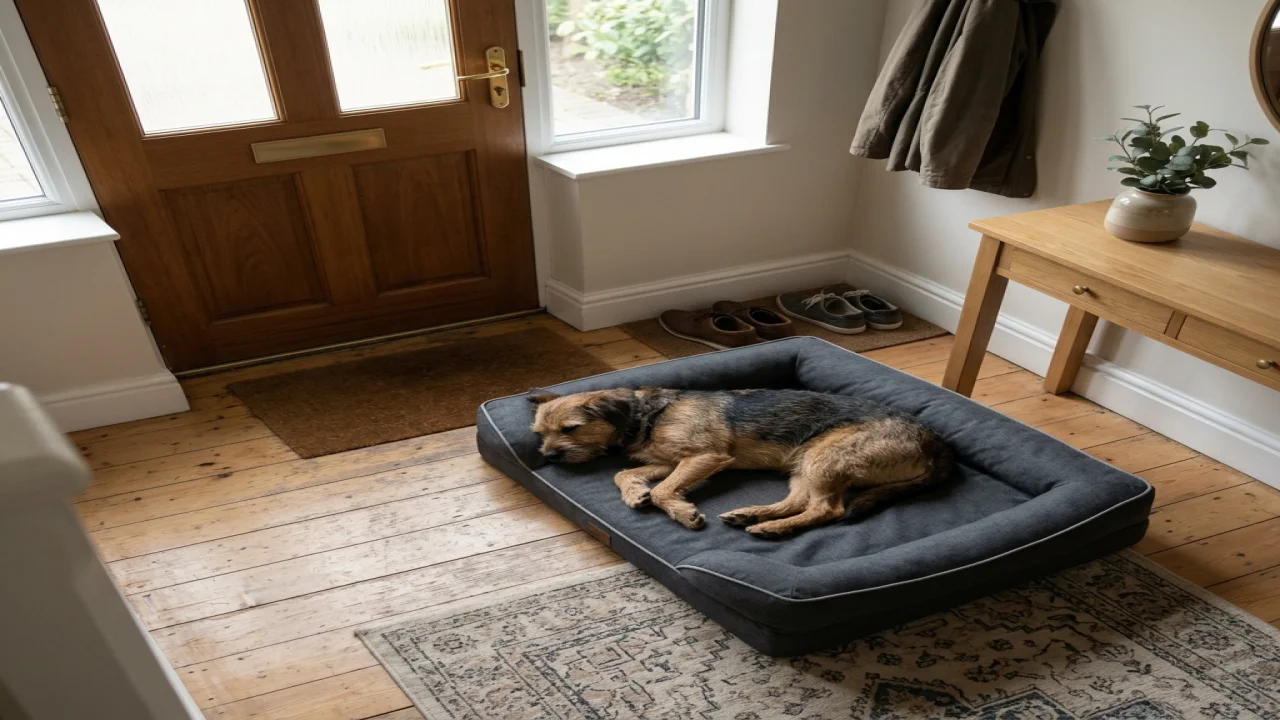
- Feed in Safe Zones: Feed your dog in a separate room, inside a crate (if comfortable), or behind a baby gate. Do not allow children or other pets to approach them while they are eating.
- Remove High-Value Items: If your dog guards bully sticks or chew bones, do not provide them in common areas. Only offer them when your dog is safely separated behind a barrier.
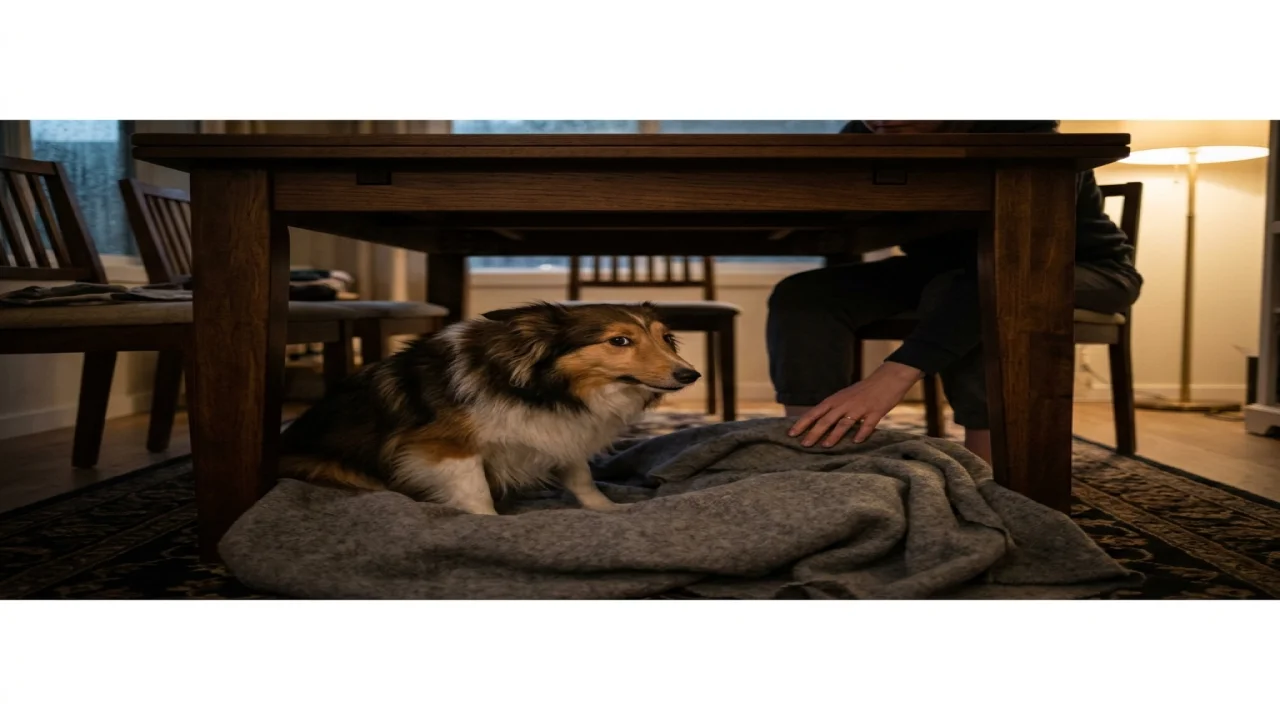
- Never Corner the Dog: If your dog steals a forbidden item (like a sock), do not chase them or corner them under furniture. This triggers defensive panic and bite risks.
- Practice the "Leave It" Command: Train your dog to drop lower-value items in exchange for treats in a structured training setup. Read our guide on teach dog leave it drop it.
Step-by-Step Desensitization and Counter-Conditioning
To resolve resource guarding, we must change the dog's emotional response from "Oh no, they are going to steal my food!" to "Great, they are approaching to give me something better!" Follow this safe setup under threshold:
- Step 1: Identify the Safe Distance: The first step in training is to find your dog's threshold distance. This is the minimum distance at which you can walk past your dog while they are eating or chewing without them showing any signs of tension, freezing, or body stiffness (e.g., 8 feet). You must always start training at a distance greater than this threshold to ensure your dog remains relaxed.
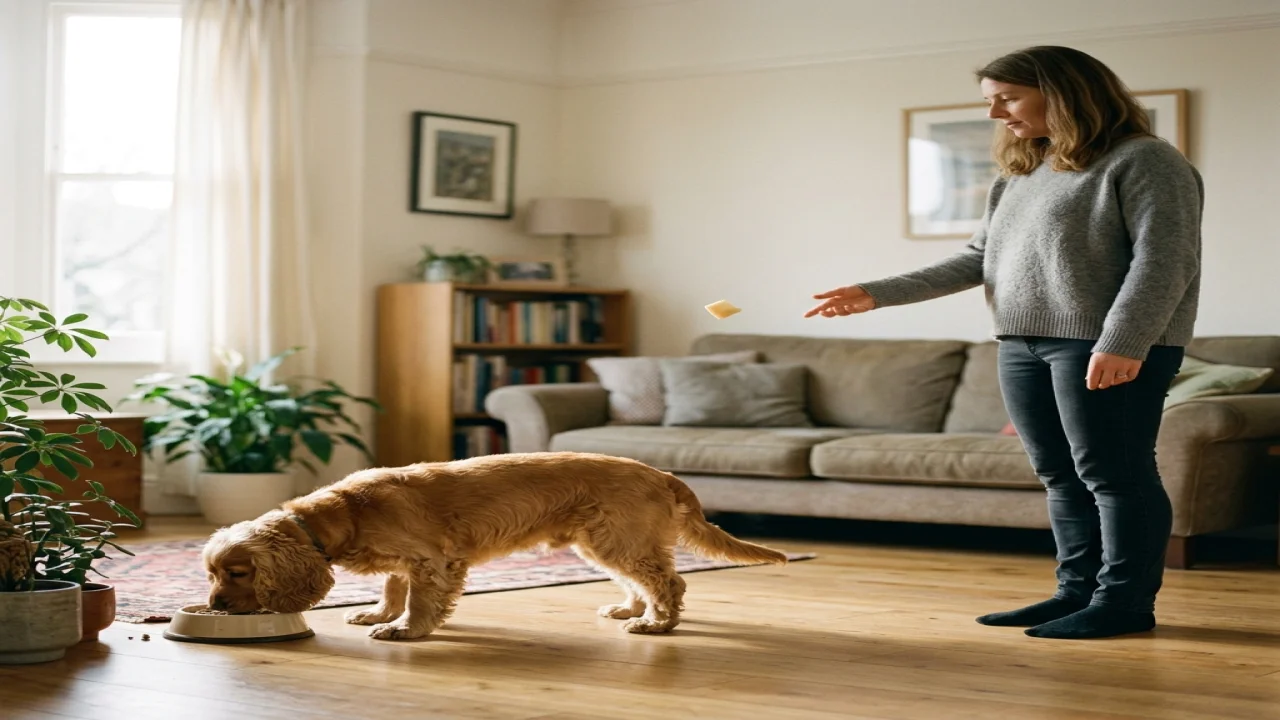
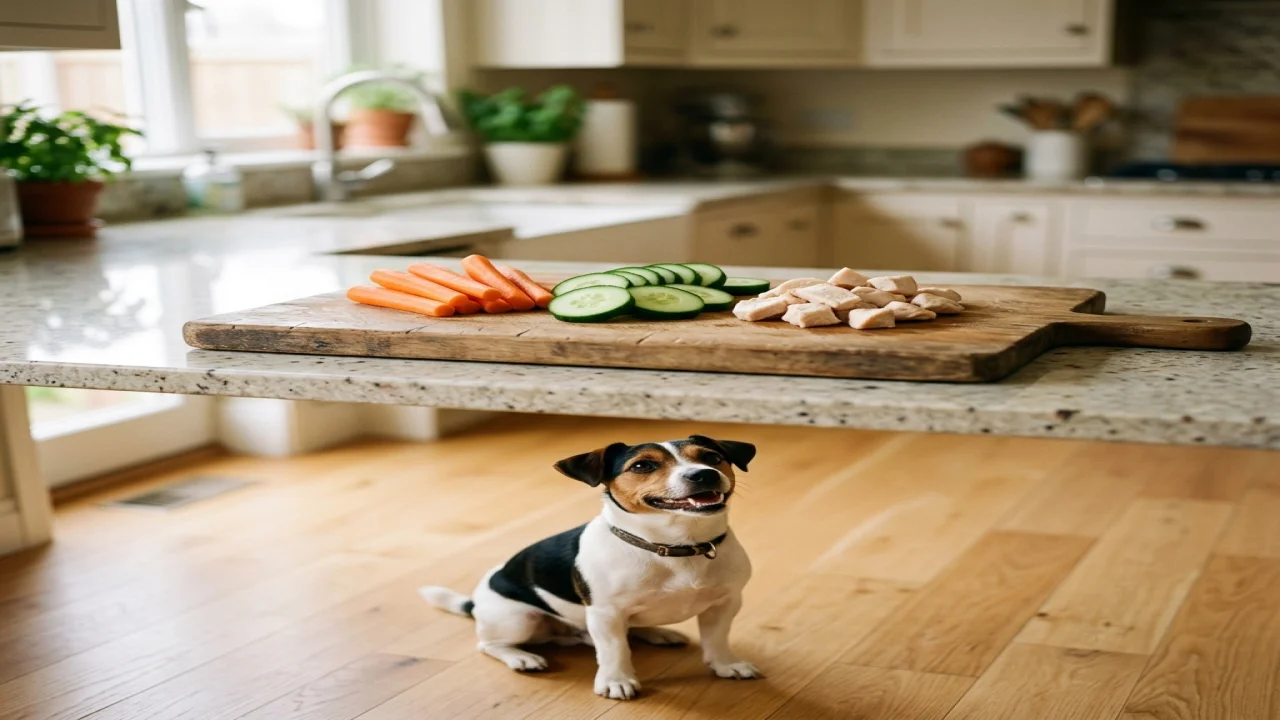
Prepare high-value treats (like small pieces of chicken or cheese) in a pouch. The food rewards must be more appealing than the resource your dog has to effectively change their emotional association.
- Step 2: Toss High-Value Treats: As you walk past at this safe distance, toss a piece of super-tasty food (like chicken or cheese) right next to their bowl. Do not stop or reach for their bowl; just toss the food and keep walking.
- Step 3: Repeat to Build Association: Repeat this several times during every meal. Over time, your dog will look up at you with happy anticipation when you approach, rather than stiffening.
- Step 4: Decrease Distance Slowly: Once your dog is relaxed at 10 feet, practice at 8 feet, then 6 feet, then 4 feet. Only advance when your dog shows loose, happy body language.
- Step 5: Practice the "Trade Up" for Stolen Items: If they have a toy, show them a treat, say "Drop," toss the treat a few feet away, and retrieve the toy only when they have walked away to eat the treat.
Common Mistakes to Avoid
Taking the Bowl Away: Regularly taking your dog's food bowl away to "prove you are boss" is a massive mistake. It causes frustration, anxiety, and actively teaches your dog that you are a threat to their meals.
Punishing the Growl: Yelling at your dog for growling teaches them that growling is dangerous. The next time they feel threatened, they may skip the growl and bite directly without warning.Using Aversive Training: Using shock collars, physical corrections, or pinning the dog down (alpha rolls) increases their fear and defensive aggression, creating a highly dangerous bite risk.
When a Veterinarian Should Be Consulted
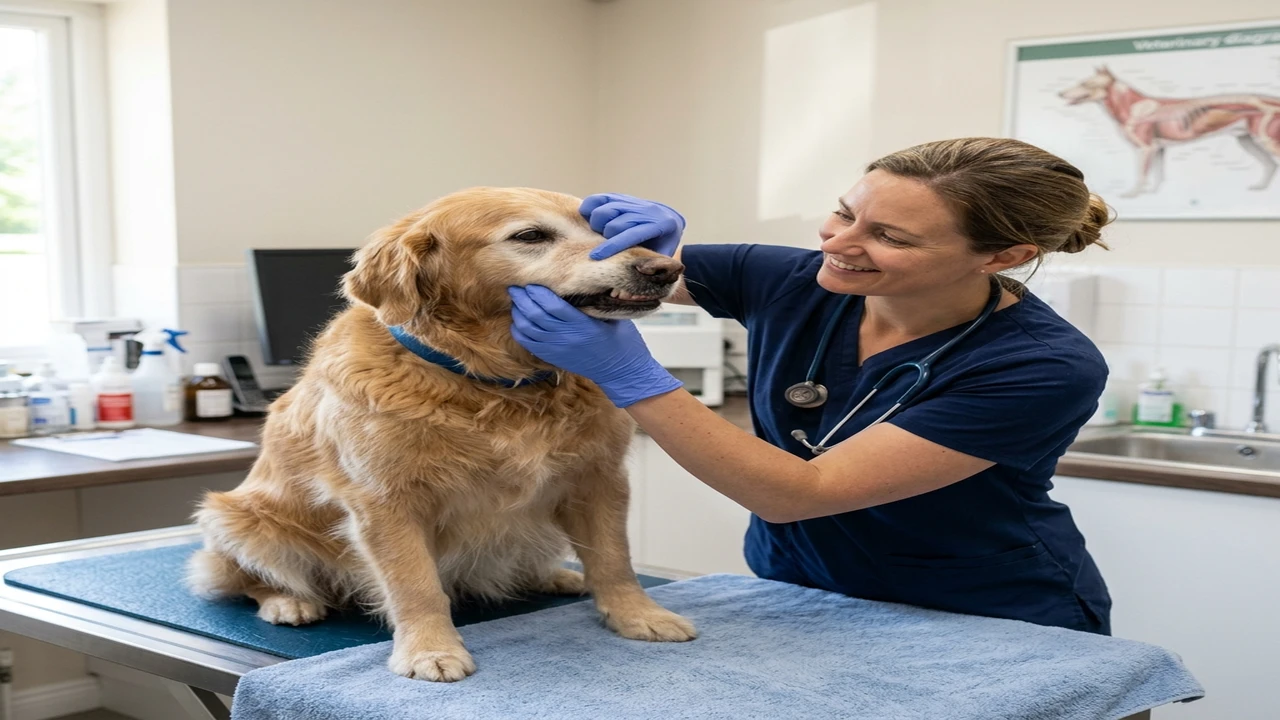
>>>Sudden resource guarding behavior in a dog that has never shown it before requires a prompt veterinary consultation. Gastrointestinal disorders, joint pain, or dental disease can cause irritability, lowering your dog's tolerance for approach or touch. A veterinary checkup, including blood work and pain assessment, is necessary to diagnose and treat any underlying medical causes. Refer to preventive care for dogs for general health guidance.
If your dog suddenly starts guarding resources, or if their guarding behavior escalates rapidly, consult your veterinarian. Pain from dental disease, arthritis, or gastrointestinal issues can make a dog irritable and protective of their space. A full veterinary exam is necessary to rule out or treat any painful conditions that might be contributing to their behavior.
When a Qualified Behavior Professional Is Needed
Resource guarding is a high-risk behavior that can lead to injury if mismanaged. If your dog growls, snaps, or bites, or if you have children in the home, seek the assistance of a certified force-free behavior consultant (IAABC, CCPDT, or a veterinary behaviorist). They will design a customized safety and training protocol tailored to your home, ensuring that you can modify the behavior safely without confrontational techniques.
This article provides general educational information and is not a substitute for individualized advice from a veterinarian or qualified behavior professional. Seek professional help if the behavior is sudden, severe, dangerous, or causing significant distress.
Sources and Further Reading
- American Veterinary Society of Animal Behavior (AVSAB)
- International Association of Animal Behavior Consultants (IAABC)
- ASPCA: Resource Guarding in Dogs
- RSPCA: Dog Behavior Advice
Conclusion
Resource guarding is a natural instinct, but it can be managed safely through understanding, environmental management, and positive reinforcement. By respecting your dog's space, avoiding confrontational training, and practicing desensitization, you can build a relationship based on trust, safety, and mutual respect.
Frequently Asked Questions about Resource Guarding
What's Your Reaction?
 Like
0
Like
0
 Dislike
0
Dislike
0
 Love
0
Love
0
 Funny
0
Funny
0
 Wow
0
Wow
0
 Sad
0
Sad
0
 Angry
0
Angry
0



Comments (0)