
Puppy Teething Guide: Symptoms, Chewing Tips and Safe Toys
Learn about puppy teething symptoms, chewing behavior, safe toys, pain relief basics, what to avoid, and when to talk to a vet.

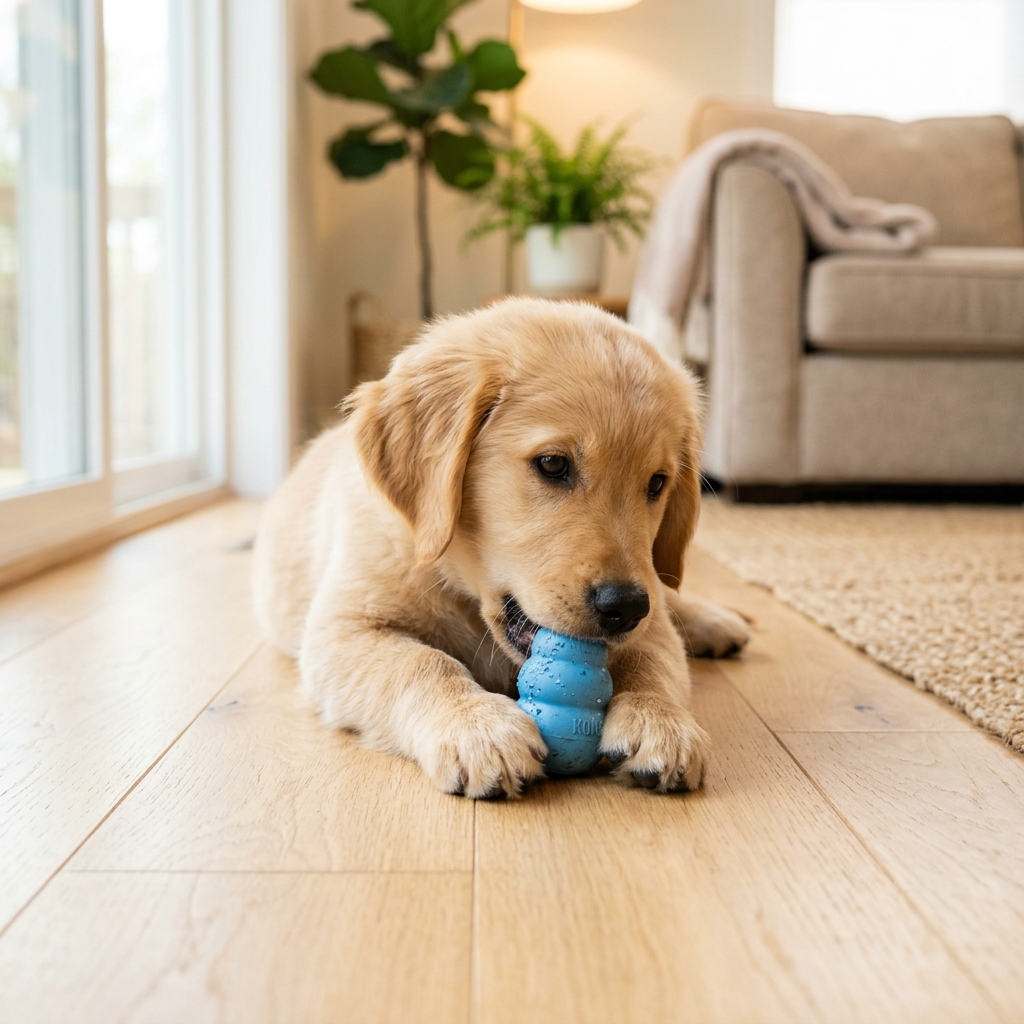
If your puppy has started chewing on everything in sight — your shoes, your furniture, your fingers, even the wall — there is a good chance teething is to blame. Puppy teething is a natural developmental process where baby teeth fall out and adult teeth grow in. It can be uncomfortable for your puppy and frustrating for you, but it is temporary, and with the right approach, you can help your puppy through it while keeping your belongings intact.
This guide covers everything you need to know about puppy teething — from understanding the timeline to managing chewing behavior, choosing safe toys, and knowing when a veterinary visit is needed.
Quick Overview: Puppy Teething at a Glance
- Timeline — Baby teeth appear by six to eight weeks; adult teeth replace them between three and seven months
- Number of teeth — Twenty-eight baby teeth, forty-two adult teeth
- Common symptoms — Increased chewing, drooling, gum tenderness, irritability
- Best relief — Appropriate chew toys, frozen items, gentle redirection
- What to avoid — Hard bones, small toys, punishment for chewing
Understanding the Puppy Teething Timeline
Birth to Three Weeks
Puppies are born without any visible teeth. During these first weeks, they rely entirely on their mother's milk for nutrition. Their gums are smooth and soft.
Three to Six Weeks
Baby teeth — also called deciduous teeth — begin to emerge. The tiny, sharp incisors appear first, followed by the canine teeth and premolars. By about six to eight weeks, most puppies have a full set of twenty-eight baby teeth. These teeth are razor-sharp, which you will quickly discover if your puppy mouths your hand during play.
Three to Four Months
The teething process begins in earnest. Baby teeth start loosening and falling out as the roots are resorbed and adult teeth push up from below. The incisors are usually the first to go, followed by the canines and premolars. This is when you may start finding tiny teeth on the floor or notice spots of blood on your puppy's toys.
Four to Six Months
This is the most active teething period. Your puppy's chewing behavior will likely peak as adult premolars and molars emerge. The gums may appear red and swollen, and your puppy may drool more than usual. This is the stage when puppies are most likely to chew on inappropriate items if appropriate alternatives are not available.
Six to Seven Months
By this age, most puppies have their full set of forty-two adult teeth. The molars — the large teeth at the back of the mouth — are the last to come in. Once all adult teeth are in place, the intense teething discomfort subsides, though your puppy may continue to enjoy chewing as a normal behavior throughout their life.
Common Teething Symptoms
Teething affects puppies differently, but most will display some combination of these signs:
- Increased chewing — Your puppy will want to chew on anything and everything to relieve gum pressure
- Drooling — More saliva than usual, sometimes noticeable on their chin and chest
- Red or swollen gums — Visible inflammation where new teeth are breaking through
- Decreased appetite — Some puppies eat less when their mouth is sore, especially with hard kibble
- Irritability — Teething discomfort can make puppies fussier and more reactive than usual
- Blood spots on toys — Small amounts of blood on chew toys are normal as baby teeth fall out
- Pawing at the mouth — Some puppies rub their face or mouth against objects for relief
Step-by-Step Tips for Managing Teething
Step 1: Provide Appropriate Chew Toys
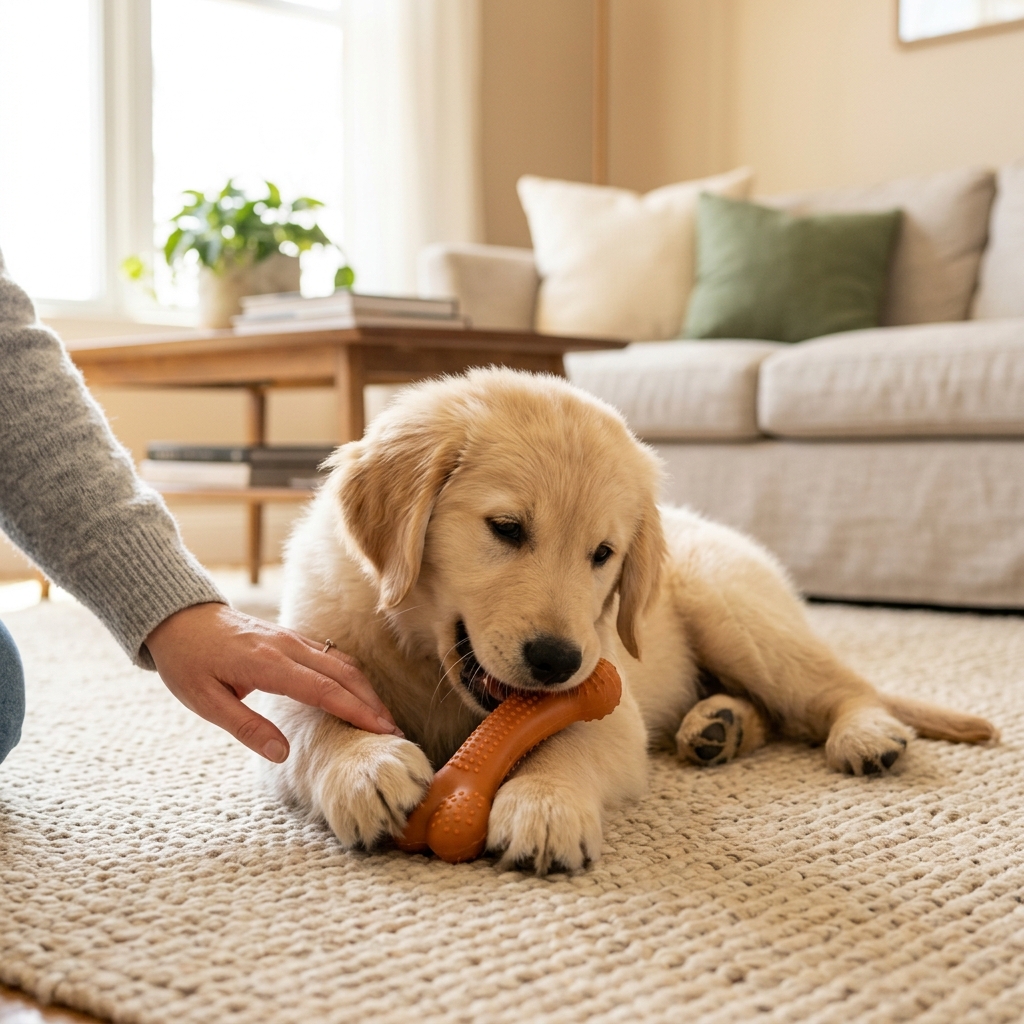
The most effective way to manage teething is to give your puppy plenty of safe things to chew on. Rubber chew toys designed for puppies provide satisfying resistance without being hard enough to damage emerging teeth. Rope toys offer textured surfaces that feel good on sore gums. Puzzle toys filled with treats keep your puppy occupied and mentally stimulated.
Rotate toys regularly to keep them interesting. A toy that was ignored yesterday might be the favorite today if it feels different in the mouth.
Step 2: Use Cold for Comfort
Cold provides natural relief for swollen, tender gums. Soak a clean washcloth in water, wring it out, twist it into a rope shape, and freeze it. The frozen cloth gives your puppy a chewable, cold surface that soothes inflammation. You can also freeze rubber toys — many are designed to be filled with wet food or peanut butter and frozen for extended chewing sessions.
Some puppies enjoy chewing on ice chips or frozen fruit like blueberries. Always supervise to prevent choking on larger pieces.
Step 3: Redirect, Do Not Punish
When you catch your puppy chewing on something inappropriate — a shoe, a table leg, a pillow — do not yell or punish. Instead, calmly remove the item, offer an appropriate chew toy, and praise your puppy when they take the toy. Your puppy is not being destructive on purpose — they are trying to relieve discomfort. Punishment teaches fear, not understanding.
Step 4: Puppy-Proof Your Space
During the peak teething months, make your home as safe as possible. Pick up shoes, clothes, remote controls, and small objects from the floor. Use cord covers on electrical wires. Apply bitter apple spray to furniture legs if your puppy targets them. Close doors to rooms where you cannot supervise. The less opportunity your puppy has to chew on the wrong things, the fewer corrections you will need to make.
Step 5: Soften Food if Needed
If your puppy shows decreased appetite or seems reluctant to eat hard kibble during teething, try adding a small amount of warm water to soften the food. This makes eating more comfortable and ensures your puppy continues to get proper nutrition during the teething process. If appetite does not return within a day or two, consult your veterinarian.
Safe and Unsafe Chew Items
Safe Options
- Rubber puppy chew toys designed for teething
- Frozen washcloths or towels
- Rope toys for gentle chewing
- Puzzle toys with treats inside
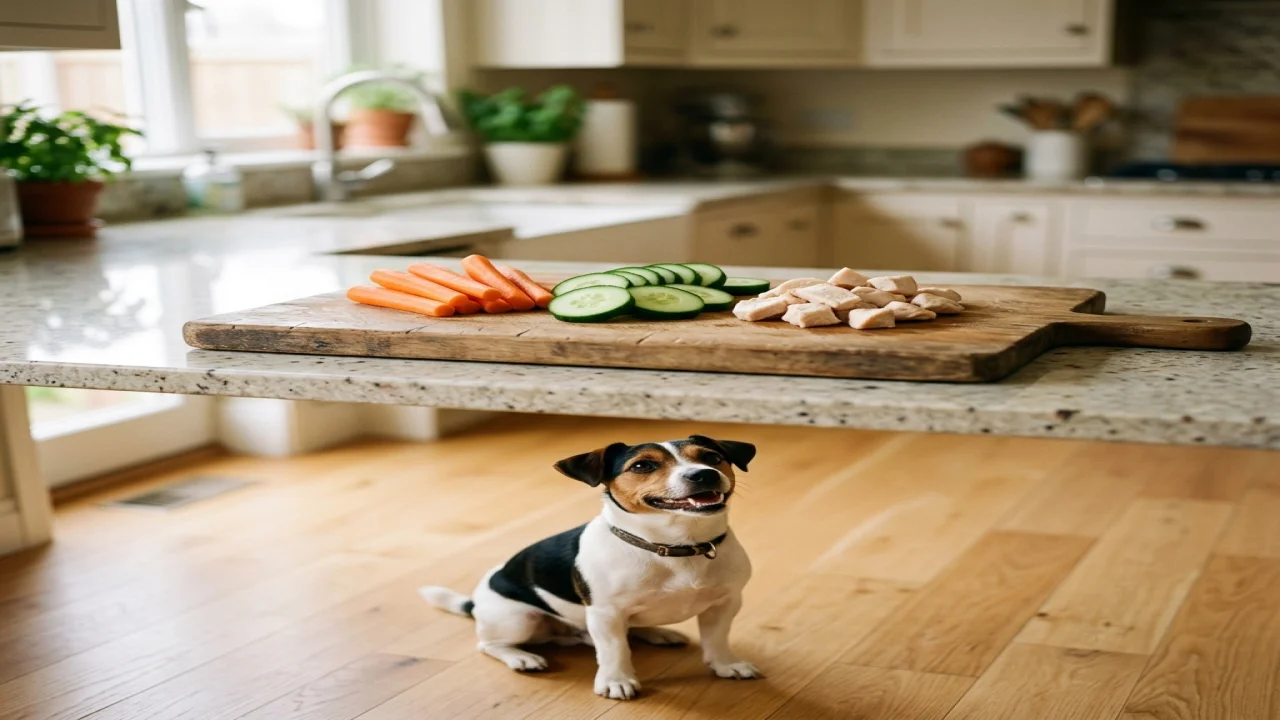
- Frozen carrots or apple slices without seeds
- Veterinarian-approved dental chews sized for puppies
Items to Avoid
- Real bones — can splinter and cause internal injuries or broken teeth
- Antlers and hooves — too hard for puppy teeth and can cause fractures
- Rawhide — can swell when swallowed and cause choking or intestinal blockage
- Toys small enough to be swallowed whole
- Stuffed toys that can be easily shredded and have parts ingested
- Sticks from the yard — can splinter and injure the mouth or digestive tract
Common Mistakes to Avoid
Punishing chewing behavior. Chewing during teething is a physical need, not a behavioral choice. Punishing your puppy for chewing creates anxiety and does not address the underlying discomfort. Redirect consistently and provide plenty of appropriate options.
Not providing enough chew options. If your puppy has nothing appropriate to chew on, they will find something inappropriate. Keep multiple types of chew toys available at all times during teething.
Giving too-hard items. Items like real bones, antlers, or ice cubes that are too large can crack developing teeth. Choose items with some give that are specifically designed for puppy teeth.
Ignoring retained baby teeth. Sometimes a baby tooth does not fall out when the adult tooth comes in, creating a "double tooth" situation. Retained baby teeth can cause misalignment, crowding, and dental disease. If you notice a baby tooth still in place alongside an adult tooth, mention it to your veterinarian.
Assuming all chewing is teething. While teething intensifies chewing, not all chewing is teething-related. Puppies also chew out of boredom, anxiety, excess energy, and natural exploration. Ensure your puppy gets adequate exercise, mental stimulation, and training alongside appropriate chew toys.
When to Call a Vet
While teething is a normal process, certain situations warrant a veterinary visit:
- Retained baby teeth that have not fallen out by seven months of age
- Heavy or persistent bleeding from the gums that does not stop
- Swollen, painful gums with signs of infection such as pus or foul odor
- Misaligned adult teeth that seem to be causing discomfort or difficulty eating
- Refusal to eat for more than twenty-four hours during teething
- Broken or cracked adult teeth from chewing on hard objects
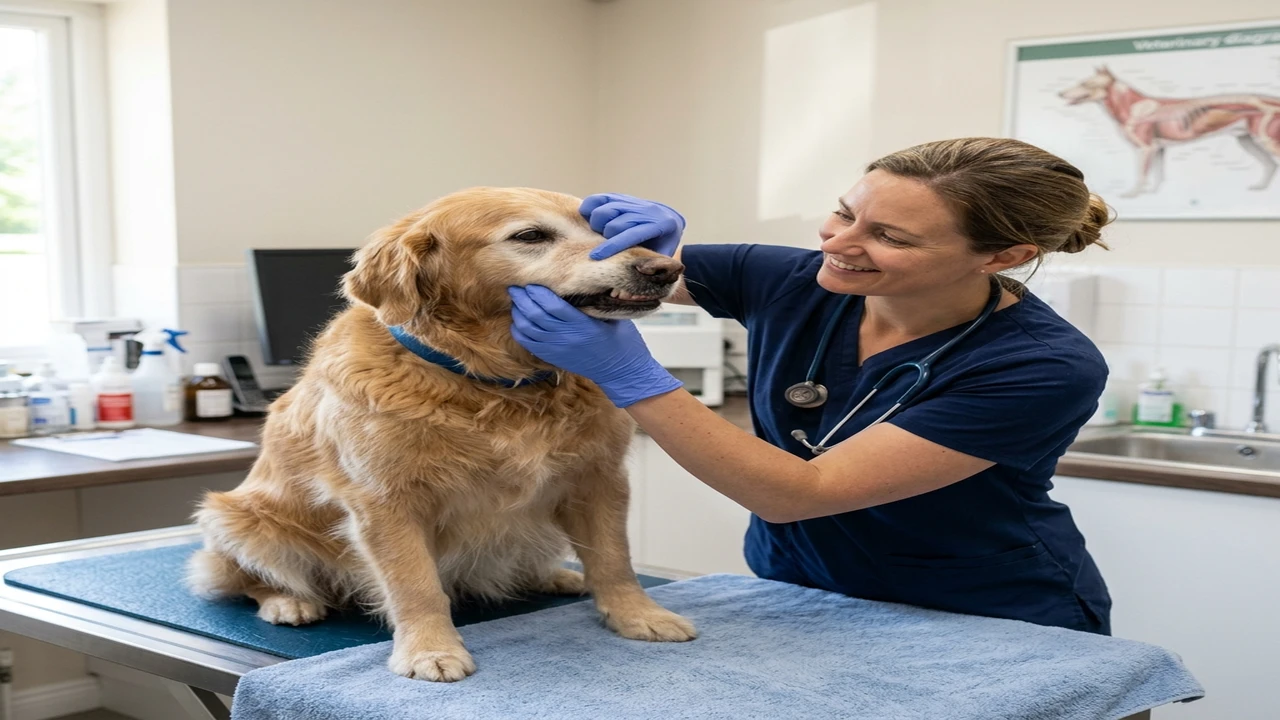
Your veterinarian can assess your puppy's dental development, remove retained baby teeth if necessary, and provide guidance on managing teething discomfort. Never give your puppy human pain medication — many common over-the-counter pain relievers are toxic to dogs. Always consult your veterinarian before administering any medication.
Final Thoughts
Puppy teething is a temporary phase that every dog goes through. It can be messy, frustrating, and exhausting — but it also passes faster than you think. By providing plenty of appropriate chew toys, using cold items for comfort, redirecting rather than punishing, and puppy-proofing your environment, you can help your puppy navigate teething with minimal stress for both of you.
Keep your patience, keep your shoes off the floor, and keep those chew toys stocked. In a few months, your puppy will have a beautiful set of adult teeth and the intense chewing phase will be behind you. The habits you establish now — providing appropriate chewing outlets, teaching what is off-limits, and monitoring dental health — will serve your dog well for their entire life.
Frequently Asked Questions
What's Your Reaction?
 Like
0
Like
0
 Dislike
0
Dislike
0
 Love
0
Love
0
 Funny
0
Funny
0
 Wow
0
Wow
0
 Sad
0
Sad
0
 Angry
0
Angry
0









Comments (0)